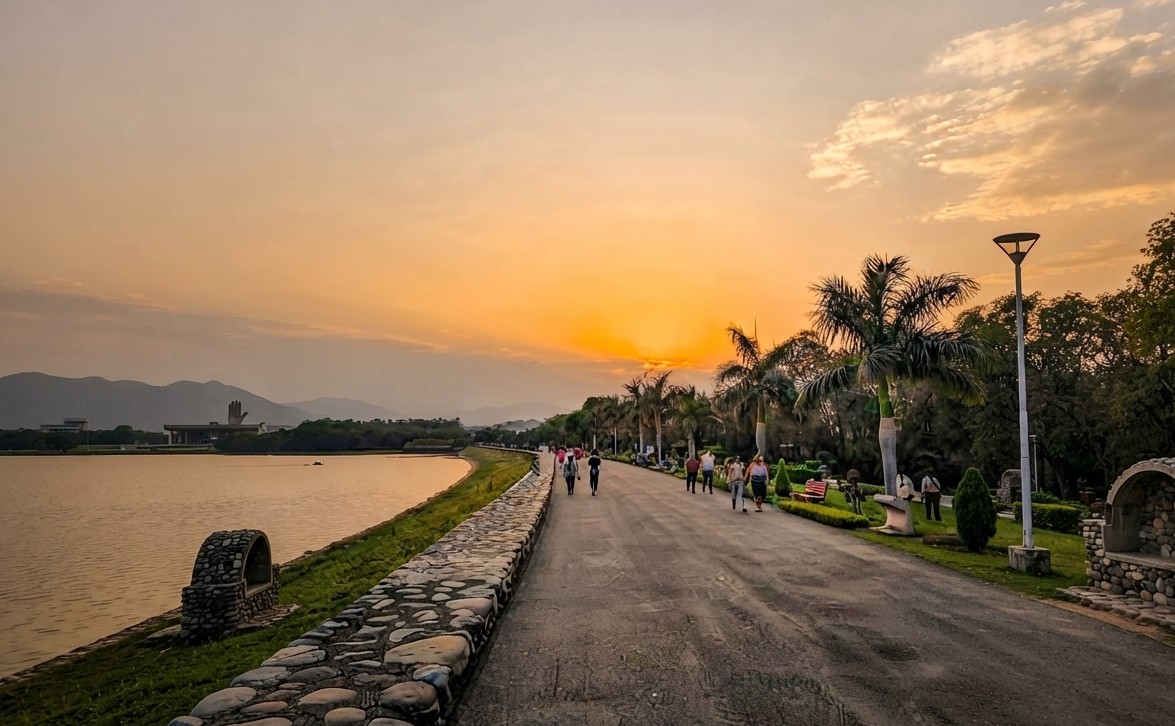
Chandigarh’s air quality varies dramatically by season. This page explains what AQI means, how it typically trends through the year in Chandigarh, and where to check live readings, rather than quoting a single number that would go out of date quickly.
Key Takeaways
- Chandigarh’s air quality is generally good for most of the year, especially during the monsoon (July-September).
- AQI deteriorates sharply from October through January due to paddy stubble burning in Punjab and Haryana.
- PM2.5 levels can spike from around 30 µg/m³ in September to over 300 µg/m³ within weeks in late October.
- The Shivalik hills can trap smoke during winter inversions, worsening pollution episodes in the city.
What Is AQI
The Air Quality Index (AQI) is a standardized scale that converts pollutant concentrations, such as PM2.5 and PM10, into a single number to indicate how clean or polluted the air is at a given time.
Chandigarh’s Seasonal AQI Pattern
Chandigarh’s air quality is among the best in North India for much of the year, particularly during the monsoon season from July to September, when AQI typically stays in the ‘Good’ category. Consequently, outdoor activities are generally safe during these months.
Why AQI Worsens in Winter
From October through January, Chandigarh’s air quality deteriorates sharply due to paddy stubble burning across Punjab and Haryana. PM2.5 levels can spike from a comfortable 30 µg/m³ in September to over 300 µg/m³ within a fortnight in late October. Additionally, the Shivalik hills act as a partial barrier during winter inversions, trapping smoke and worsening pollution episodes.
How Long Does the Pollution Season Last
The stubble-burning-driven pollution spike typically lasts 3 to 5 weeks in October and November, though elevated pollution can persist into December and January due to winter temperature inversions and reduced wind dispersal.
Where to Check Live AQI
For real-time readings, the Central Pollution Control Board (CPCB), SAFAR, and apps like IQAir provide continuously updated AQI data for Chandigarh. Therefore, checking one of these sources is the best way to plan outdoor activities, especially during winter months.
Frequently Asked Questions
What is a good AQI level in Chandigarh?
An AQI between 0-50 is considered ‘Good’, and Chandigarh often reaches this range during the monsoon season.
Why does Chandigarh’s air quality worsen in winter?
Paddy stubble burning in Punjab and Haryana combined with winter temperature inversions sharply worsens air quality from October to January.
How long does the pollution season last in Chandigarh?
The main stubble-burning pollution spike lasts 3 to 5 weeks in October and November, with elevated levels sometimes persisting into January.
Where can I check Chandigarh’s live AQI?
The Central Pollution Control Board (CPCB), SAFAR, and apps like IQAir provide real-time AQI data.
Is Chandigarh’s air quality better than Delhi’s?
Generally yes; Chandigarh tends to have better air quality than Delhi NCR outside the peak stubble-burning weeks.
What time of year has the best air quality in Chandigarh?
The monsoon season, from July to September, typically has the cleanest air of the year.
Understanding Chandigarh’s seasonal AQI pattern helps with planning outdoor activities, especially during the October-January pollution season. For a broader look at seasonal conditions, see our Chandigarh Weather guide.